

- Home
- India
- World
- Premium
- THE FEDERAL SPECIAL
- States
- Perspective
- Videos
- Sports
- Education
- Entertainment
- Elections
- Features
- Health
- Business
- Series
- In memoriam: Sheikh Mujibur Rahman
- Bishnoi's Men
- NEET TANGLE
- Economy Series
- Earth Day
- Kashmir’s Frozen Turbulence
- India@75
- The legend of Ramjanmabhoomi
- Liberalisation@30
- How to tame a dragon
- Celebrating biodiversity
- Farm Matters
- 50 days of solitude
- Bringing Migrants Home
- Budget 2020
- Jharkhand Votes
- The Federal Investigates
- The Federal Impact
- Vanishing Sand
- Gandhi @ 150
- Andhra Today
- Field report
- Operation Gulmarg
- Pandemic @1 Mn in India
- The Federal Year-End
- The Zero Year
- Science
- Brand studio
- Newsletter

The last of the moiras: Who will make tomorrow's mishti?
As tech steps in and youngsters look for 'easier' careers, the question is no longer how to make the perfect mishti - it's about who will keep the tradition going

“Nobody wants to become a sweet-maker anymore. Call centres are easier, and culinary schools don’t train mishti chefs," says Nobin Das, a moira of Kolkata. Das is not alone. As the festive season brings families together over boxes of rosogolla, sandesh and mishti doi, Bengal’s famed sweet shops and the moiras (sweetmeat artisans), whose skilled hands have preserved a...
“Nobody wants to become a sweet-maker anymore. Call centres are easier, and culinary schools don’t train mishti chefs," says Nobin Das, a moira of Kolkata.
Das is not alone. As the festive season brings families together over boxes of rosogolla, sandesh and mishti doi, Bengal’s famed sweet shops and the moiras (sweetmeat artisans), whose skilled hands have preserved a centuries-old culinary tradition, repeat Das's story.
Despite the high demand for sweets — a staple in Bengali households — during festivities, the industry is grappling with a shortage of trained artisans and the demands of modern production technologies. This has left the existing tribe of artisans anxious about the future of this culinary art form.
Craftsmanship shaped by love for 'mishti'
In Bengal, no festive visit is quite complete without a box of mishti (sweets). As the state bids adieu to Durga Puja this year and the celebrations shift to Kali Puja and Diwali, sweets become an expression of affection, gratitude and familial bonds.
Visiting elders and relatives with a carefully chosen assortment is an enduring custom, often reciprocated with an elaborate spread of sweets at the host’s home. For Kolkata’s sweet shops, it is among the busiest times of the year, when the day's stock can disappear well before evening.
Also read | Bitter story of a sweet delicacy: Why Bengal’s nolen gur faces an existential crisis
Walk into a traditional mishti shop in Bengal, and what you see is not merely a display of sweet treats but culinary art resting on the shelves. Behind the counter, fresh chhana (cottage cheese) is kneaded, sugar syrup gently bubbles on huge korais (metal pots), and karigars (sweet makers) bend over their workstations, shaping sweets with muscle memory acquired over decades. Each piece must have the right texture, shape, and finish, whether it is a delicate sandesh or a soft, syrup-soaked rosogolla.
The craft involves far more than following instructions. A sandesh must be delicate without falling apart; a rosogolla needs the right balance of softness and elasticity.
Yet, behind this familiar scene is a growing anxiety. Bengal’s sweet industry is facing a shortage of skilled artisans, threatening the continuity of techniques that have helped define its culinary identity. As technology transforms production and younger generations look towards alternative careers, the question is no longer simply how to make the perfect mishti, but who will make it tomorrow.
Sweet-making not a cakewalk
Ask anyone to describe Kolkata, and rosogolla, sandesh and mishti doi are likely to find their way into the conversation. These sweets are deeply embedded in the city's socio-cultural fabric, accompanying celebrations, marking milestones and making their way into everyday expressions of hospitality.
Kolkata, and particularly its older neighbourhoods in north Kolkata, have long been associated with an extraordinary sweet-making tradition. Its historic shops have witnessed changing tastes, generations of customers and the transformation of the city itself, while continuing to preserve recipes and techniques that remain central to Bengal's culinary heritage.
At establishments such as Nalin Chandra Das & Sons, whose history dates to 1841, the sweet-making tradition is closely connected to the artisans who keep it alive. The work unfolding behind the counter is a reminder that heritage is not simply about preserving an old recipe or retaining a shop's name. It is also about sustaining the knowledge required to reproduce a familiar taste and texture, day after day.
Also read: Where the azaan meets the arati: Bengal’s shared Durga Puja traditions
The craft involves far more than following instructions. The consistency of chhana, the temperature of the syrup, the moisture in a mixture and the pressure applied while shaping a sweet can determine its final character. A sandesh must be delicate without falling apart; a rosogolla needs the right balance of softness and elasticity.
For the experienced moira, these decisions become almost instinctive. For a newcomer, mastering them can take years.
Beauty, labour of handmade sweets
In traditional sweet-making, the hands are as important as the ingredients. Experienced artisans can often judge the consistency of a mixture by touch, recognise changes in syrup by sight and smell, and adjust their technique according to the behaviour of the ingredients.
Ishita Dey, author of Sweet Excess: Crafting Mishti in Bengal, explores the sensory knowledge that underpins this tradition. She describes the importance of andaj—an intuitive judgment developed through experience—which enables sweet-makers to assess texture, determine the right stage of preparation and give a sweet its characteristic form.
The future of sweet making may lie in a careful balance: using technology to support consistency, hygiene and scale while retaining human expertise at the stages where touch and judgement make the greatest difference.
According to Dey, the process of mastering these skills is gradual. An artisan responsible for working on the pata, or shaping surface, may need years to develop the sensitivity required to handle the mixture correctly. Repetition eventually transforms learned movements into muscle memory.
Also read: How a simple plate of khichuri became a symbol of Bengal’s Durga Puja
The delicate process of crystallising poppy seeds in sugar syrup offers an example of how much the craft depends on the senses. Sight, touch and smell help an artisan determine whether the process is progressing as it should. Such expertise cannot be acquired merely by reading a recipe; it develops through sustained practice.
This is also why handmade sweets can possess subtle variations that reflect the person who makes them. Machines may offer consistency and speed, but the human ability to respond to small changes in ingredients remains invaluable, particularly when working with traditional preparations.
A craft struggling to find new hands
For generations, sweet-making skills have travelled through family businesses and informal apprenticeships. Younger workers learnt by assisting senior artisans, observing their techniques and gradually taking responsibility for more complex tasks. Not every moira inherits the profession from family; many enter the trade through shop-floor training.
Sweet-making requires patience, physical labour and years of practice before an artisan can confidently manage the more demanding stages of production. Photo: Ayandrali Dutta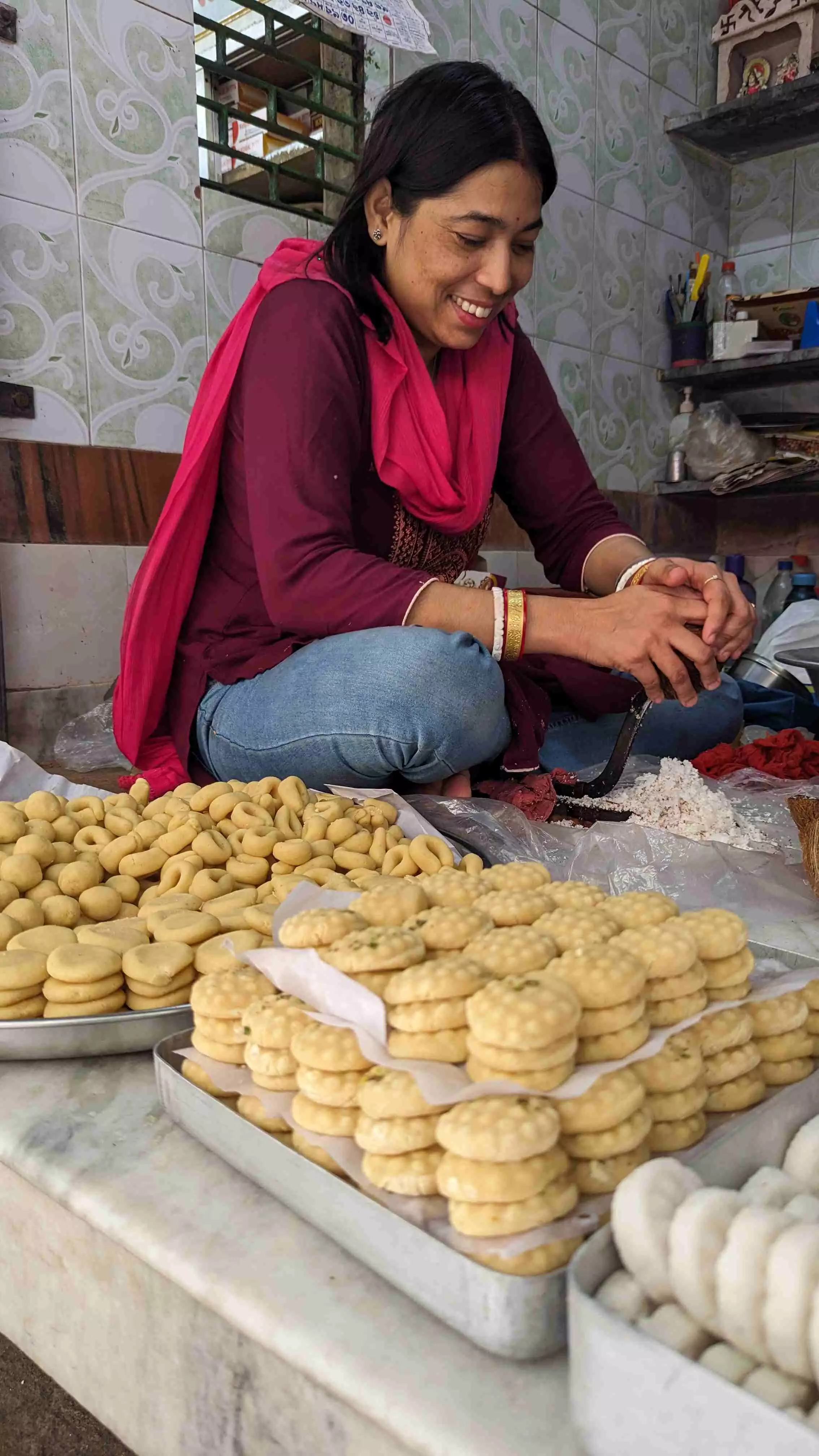
Today, however, the industry is struggling to attract fresh talent.
Nobin Das, the moira mentioned earlier, who works at a small sweet shop in north Kolkata, believes the problem has been building for years. He points to the appeal of alternative employment and the lack of specialised training opportunities.
“We even tried to launch a mishti chef programme with a hospitality institute, but it didn’t take off. Unless you work on the shop floor, you can’t learn the craft,” Das tells The Federal.
Also read: India Local review: A culinary ode to the street foods of the country
The concern is not difficult to understand. Sweet-making requires patience, physical labour and years of practice before an artisan can confidently manage the more demanding stages of production. For young people seeking quicker routes to employment, the long apprenticeship hardly appeals.
Jogu Dutta, who has spent much of his life around the trade, also reflects the anxiety surrounding the shortage of skilled workers. When experienced artisans retire without adequately trained successors, shops risk losing not only their workforce but also the techniques that distinguish their products.
And the challenge extends beyond the sweet shop itself.
Why moulds, hands that craft them matter too
One of the less visible crafts associated with Bengal's sweet-making tradition is the making of sandesh moulds. These moulds help give sweets distinctive and intricate shapes, patterns and decorative details that form an important part of their visual identity.
Jaya Das, a regular at a sweet shop in North Kolkata whose family is also involved in making sandesh moulds, fears that this specialised trade faces an equally uncertain future.
“The way I see it, given the current perspective, the future is very bleak. Because nobody from the new generation is getting involved in this craft, no new blood. We are the only ones who are left; we are keeping it going,” she tells The Federal.
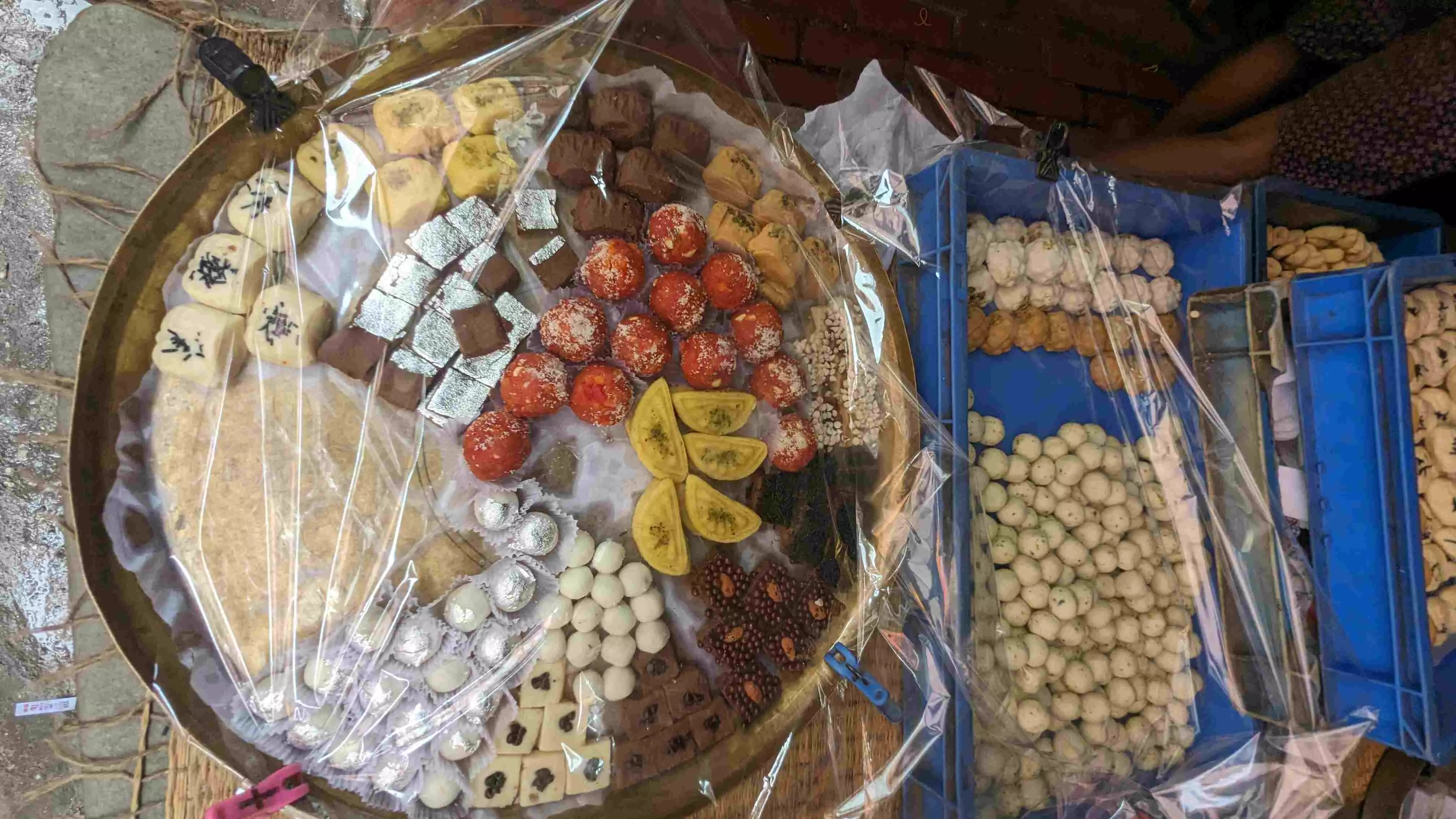
One of the less visible crafts associated with Bengal's sweet-making tradition is the making of sandesh moulds. These moulds help give sweets distinctive and intricate shapes, patterns and decorative details that form an important part of their visual identity. Photo: Ayandrali Dutta
The problem is compounded by demand. Traditional sweet moulds continue to be sought after, but the limited availability of skilled workers means makers are unable to produce enough to meet orders.
Also read: What 'veg mutton' offering to Kali tells about Bengal's culinary history
This reveals how interconnected Bengal's sweet-making ecosystem really is. The future of mishti depends not only on the artisans who prepare and shape it, but also on the craftspeople who make the tools that enable them to do so. If mould-making skills disappear, the loss could extend to traditional designs and decorative forms that have been associated with Bengali sweets for generations.
Preserving the craft, therefore, requires looking beyond the finished product to the network of people and skills that sustain it.
Technology: boon or bane?
Modern production methods have become increasingly important as sweet shops respond to growing demand, changing consumer expectations and the need for consistent quality. Machines can assist with mixing, kneading, beating and other labour-intensive stages, while improved packaging and quality-control systems help businesses maintain standards as they expand.
At Balaram Mullick & Radharaman Mullick, Sudip Mullick represents a generation of sweet-makers navigating the relationship between traditional recipes and modern production. The business uses specialised equipment, including dough kneaders, cream beaters and machinery for newer sweet formats, while continuing to work with familiar flavour profiles across an extensive repertoire.
Bancharam, too, has modernised aspects of its production to accommodate larger volumes and contemporary creations such as baked sandesh pie and mihidana pantua slice.
At Mishtanna, the production process combines traditional recipes and skilled artisanship with modern manufacturing, quality assessment and hygienic packaging. Such approaches demonstrate that efficiency and heritage need not be mutually exclusive.
The crucial question is where mechanisation helps and where it compromises the craft.
Some stages of preparation can be automated without significantly altering the final product. Others depend on the artisan's judgement and handling. Sitabhog, the GI-tagged sweet from Bardhaman, for instance, is known for its fine, distinctive strands. Using a machine such as one designed for chowmein to produce those strands may seem convenient, but the resulting texture can differ from that achieved through traditional methods.
Also read: Shahu Patole interview: How ‘Dalit Kitchens of Marathwada’ links food with caste system
The future may lie in a careful balance: using technology to support consistency, hygiene and scale while retaining human expertise at the stages where touch and judgement make the greatest difference.
Preserving the legacy, one sweet at a time
Safeguarding Bengal's mishti heritage requires more than celebrating famous shops during the festive season. It calls for a renewed commitment to the people who make the sweets, as well as those who supply the ingredients and craft the tools.
Structured apprenticeships could give younger workers a clearer path into the profession. Hospitality institutes and culinary schools could collaborate with experienced moiras to develop specialised courses combining practical training with food science, hygiene and an understanding of traditional ingredients. The same approach could extend to allied crafts such as mould-making — if Bengal’s sweet-making heritage is to endure the pressures of changing times.