- Home
- India
- World
- Premium
- THE FEDERAL SPECIAL
- States
- Perspective
- Videos
- Sports
- Education
- Entertainment
- Elections
- Features
- Health
- Business
- Series
- In memoriam: Sheikh Mujibur Rahman
- Bishnoi's Men
- NEET TANGLE
- Economy Series
- Earth Day
- Kashmir’s Frozen Turbulence
- India@75
- The legend of Ramjanmabhoomi
- Liberalisation@30
- How to tame a dragon
- Celebrating biodiversity
- Farm Matters
- 50 days of solitude
- Bringing Migrants Home
- Budget 2020
- Jharkhand Votes
- The Federal Investigates
- The Federal Impact
- Vanishing Sand
- Gandhi @ 150
- Andhra Today
- Field report
- Operation Gulmarg
- Pandemic @1 Mn in India
- The Federal Year-End
- The Zero Year
- Science
- Brand studio
- Newsletter

Why Delhi’s roomali rolls, a variant of Kolkata’s kathi classics, remain a mostly-local legend
Khan Chacha, which started operations in Khan Market in the '70s, is synonymous with Delhi's roomali roti rolls. So much so that when a member of the original owner's family was arrested recently in a digital financial fraud case, most reports identified him as a descendant of the Khan Chacha founder, though they no longer own the chain. But the restaurant is not the only one in the national capital rolling up a roomali meal-on-the-go.

Every great city has a handheld food that defines its rhythm. In India, Kolkata has its legendary kathi rolls, Mumbai swears by its frankies, and in Delhi, the answer comes wrapped in a soft, almost silk-like bread — the roomali roti roll.At the heart of this story is Khan Chacha, an institution that transformed a simple kebab-serving eatery into a cult favourite.So much so that when...
Every great city has a handheld food that defines its rhythm. In India, Kolkata has its legendary kathi rolls, Mumbai swears by its frankies, and in Delhi, the answer comes wrapped in a soft, almost silk-like bread — the roomali roti roll.
At the heart of this story is Khan Chacha, an institution that transformed a simple kebab-serving eatery into a cult favourite.
So much so that when a 49-year-old restaurateur was arrested by Delhi police last week, for allegedly providing mule bank accounts to those accused in cases of ‘digital arrest’ frauds, and his brother reportedly bound down in the same case, news reports identified the two as sons of the Khan Chacha founder, even though the family is purportedly no longer associated with the iconic brand. According to reports, Mohammad Javed and his brother Saleem now operate another roll joint in Khan Market, Rule the Rolls.
Unlike Kolkata’s kathi rolls, the origin story of which has been well documented (it is widely believed to have been first made in the kitchen of Nizam’s, a city restaurant, at the beginning of the 1930s), the genesis of Delhi’s roomali roti rolls has been less discussed.
Perhaps it was the proximity in the Mughal kitchens — most culinary experts credit them for bringing roomali rotis to India — that united the galoutis and seekh kebabs that often form the core of these melt-in-your-mouth rolls with the rotis. What resulted was ultra-thin flatbreads crafted from refined flour, known for their soft, pliable, almost handkerchief-like texture that effortlessly encases the fillings; very different from the flaky paratha of Kolkata’s kathi rolls.
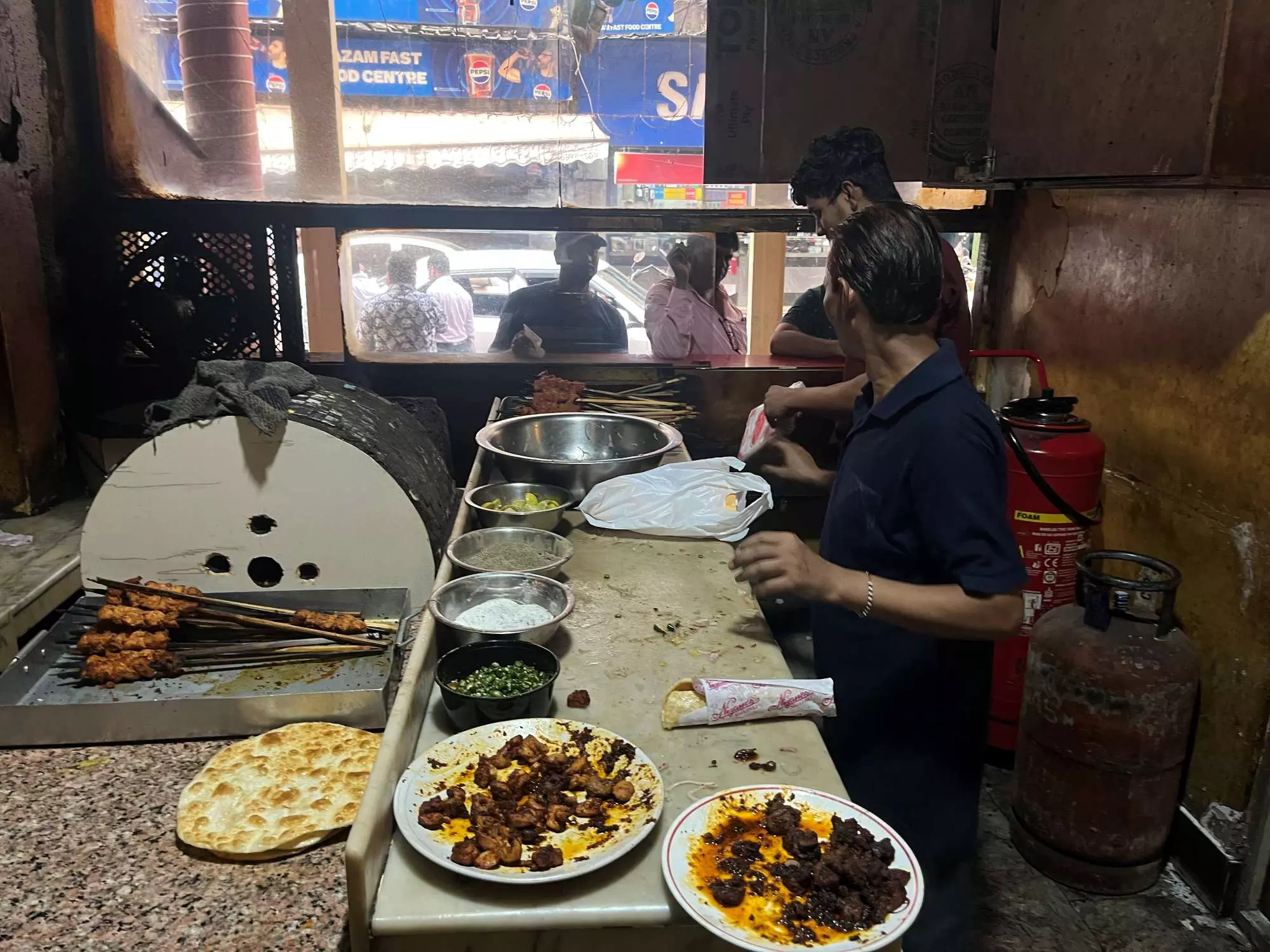
File photo of kathi rolls being made at the kitchen of Nizam's Kolkata. Photo by Jayanta Shaw
There is no general acceptance on who first thought of wrapping up the kebabs (or paneer or soya for vegetarians) in the roomali roti and serving them to customers as a meal-on-the-go. But that over the years it’s become Khan Chacha’s signature delicacy is equally well established.
Incidentally, Khan Chacha doesn’t identify just as a rolls shop but as a Mughlai cuisine restaurant also serving biryanis and curries. In fact, according to most accounts, Khan Chacha did not even begin as a roll specialist.
Founded by Haji Banda Hasan around 1972, the eatery was initially known for its succulent seekh kebabs and rich Mughlai offerings. The journey began far from the bustling lanes of Khan Market. As a teenager who came in from Saharanpur (Uttar Pradesh) in the 1960s, Hasan found his footing among the food stalls near Delhi’s Jama Masjid. There, he picked up the craft of making kebabs while taking on small jobs.
In 1972, he took a leap of faith, setting up a modest stall in the then-quiet Sujan Singh Park–Khan Market area, serving seekh kebabs and chicken tikka wrapped in delicate roomali rotis. The stall quickly became a neighbourhood favourite, earning him the affectionate name “Khan Chacha”.
As its popularity grew, so did challenges; frequent relocations driven by rising rents. Eventually, the brand found stability at its current address, marking a new chapter in its journey — from modest beginnings to becoming synonymous with indulgent, smoky, perfectly balanced rolls that have fed generations of Delhiites.
A regular at the Khan Market outlet describes it best: “Thin rotis, laced with egg, chicken, onions, diced capsicum, green chillies and chaat masala—that’s what the Delhi iconic roll is all about,” says 50-year-old businessman Kishan Kapoor, who has been coming to Khan Chacha since his high school days.
The kebabs — juicy seekhs, melt-in-the-mouth galoutis, or charred tikkas — each bringing its own personality to the wrap. The smoky aroma, the slight tang of spices, the crunch of onions, and the warmth of the roti come together in a way that feels both indulgent and comforting.
According to popular Indian food critic Vir Sanghvi in his online food blog virsanghvi.com, “…the Khan Chacha formula is to make three kababs: a chicken tikka, a thin seekh of the kind we used to buy from street vendors… and a so-called kakori, which is probably not a kakori at all but is more like a real seekh kabab than the thing they call a seekh.”
Of course, there are vegetarian options too.
Over the years, Khan Chacha has expanded into a chain, adapting to changing times while retaining its core identity. Yet, its flagship outlet in Khan Market continues to hold a special place in the city’s culinary map.
Also read: Smell, stigma and supremacy: How 'food racism' shapes everyday life in India
It is hardly the only place in the national capital rolling up a roomali roti delicacy, however.
At least two other Delhi culinary institutions, Karim’s and Kake, also serve roomali roti rolls. As do multiple other big and small eateries.
“I personally like the kakori roomali rolls at Alkauser Mughlai Food at Chanakyapuri, it could be because of their kebabs. I can literally count and say how many times I visited Khan Chacha,” says Shweta Singh, a 30-year-old architect.
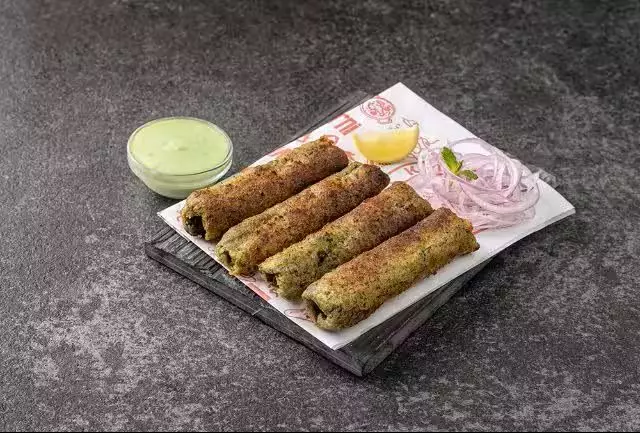
Seekh kebabs, one of hte many popular fillings for a roll. Photo: By special arrangement
Delhi also had Nizam’s, known for their very famous Calcutta-style rolls, reminds culinary commentator & historian Sourish Bhattacharya. “Through the 1980s and early ’90s, the name barely registered across the city. And then, almost suddenly, it did due to the students of Modern School who used to be very regular there. I also got to know about the place only from them.”
Yet, in general, the Delhi roomali roll has not managed to capture public attention outside the national capital the same way as the Kolkata kathi roll, which last year ranked sixth in a list of the world’s best wraps by TasteAtlas, a culinary guide for traditional dishes.
One reason could be that Bengalis took the roll with them wherever they went, much like those from the North carried butter chicken and chicken tikka, making these more synonymous with Delhi cuisine. The other could be that though loyalists would point out that the roomali roll is far healthier than the “greasy paratha rolls”, some things taste better with a bit of oil, maybe?
Indeed, traditionalists would back Sanghvi all the way to Bengal and back, in the opinion he expressed in a 2015 article that “certainly, the idea was never that you used a roomali roti (as some modern-day rolls do); it had to be a sturdy bread”.
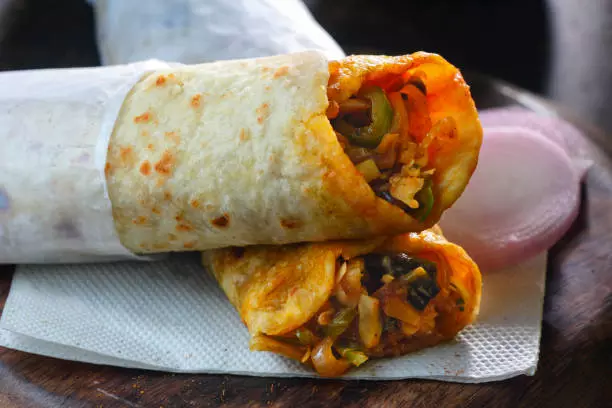
Traditional kathi rolls. Photo: By special arrangement
Still, the roomali rolls continue to be a delectable, satisfying wrap-meal for those looking for a healthier option, or even as a change from the ubiquitous paratha rolls. Some may even argue that the simpler roti allows the flavour of the kebabs to be enjoyed better.