- Home
- India
- World
- Premium
- THE FEDERAL SPECIAL
- States
- Perspective
- Videos
- Sports
- Education
- Entertainment
- Elections
- Features
- Health
- Business
- Series
- In memoriam: Sheikh Mujibur Rahman
- Bishnoi's Men
- NEET TANGLE
- Economy Series
- Earth Day
- Kashmir’s Frozen Turbulence
- India@75
- The legend of Ramjanmabhoomi
- Liberalisation@30
- How to tame a dragon
- Celebrating biodiversity
- Farm Matters
- 50 days of solitude
- Bringing Migrants Home
- Budget 2020
- Jharkhand Votes
- The Federal Investigates
- The Federal Impact
- Vanishing Sand
- Gandhi @ 150
- Andhra Today
- Field report
- Operation Gulmarg
- Pandemic @1 Mn in India
- The Federal Year-End
- The Zero Year
- Science
- Brand studio
- Newsletter

Down the decades, how experience of travelling with the Indian passport has changed for citizens
The Ministry of External Affairs recently clarified that the passport is simply a travel document and not proof of citizenship. Be that as it may, for Indians going abroad, the blue booklet is both an identity as well as a reflection of India’s diplomatic and economic standing. And that perception continues to evolve.

When the Ministry of External Affairs (MEA) recently clarified that an Indian passport is a travel document and not proof of citizenship, the statement was intended to settle a legal distinction. The logic, according to the government, was simple. Citizenship is governed by the Citizenship Act, 1955, while passports are issued under the Passports Act, 1967, it said, citing Section 20 of...
When the Ministry of External Affairs (MEA) recently clarified that an Indian passport is a travel document and not proof of citizenship, the statement was intended to settle a legal distinction. The logic, according to the government, was simple. Citizenship is governed by the Citizenship Act, 1955, while passports are issued under the Passports Act, 1967, it said, citing Section 20 of the Passports Act, which allows it, “in certain public interest cases”, to issue a passport or travel document to someone who is not an Indian citizen. The passport then is a document which merely enables international travel as far as the Centre is concerned.
Be that as it may, the clarification has inadvertently reopened a larger conversation — what does an Indian passport actually represent today?
For millions of Indians who travel abroad for business, education, leisure or work, the blue Indian passport is far more than a government-issued booklet. It is often the letter of introduction at an immigration counter, a measure of global trust, a symbol of national identity and, at times, a reflection of India's diplomatic and economic standing.
Forty-four-year-old Arunima Sinha, learning & development and onboarding head at a media company in Gurugram says, "I've experienced a subtle but positive change in how people interact with me over the past few years. There's more awareness about India today." She recalls a memorable encounter in Vietnam, where she met British travellers staying at the same hostel. "They awkwardly apologised for colonialism and joked that Britain stole tea and called it its own. I found the conversation amusing and accepted their somewhat clumsy apology gracefully."
Also read: Ground report from Kathmandu: Why in Nepal the GenZ say their movement is ‘far from over’
The journey of the Indian passport mirrors the country's own evolution — from a newly independent nation whose citizens travelled abroad sparingly to one of the world's fastest-growing outbound travel markets. While the legal distinction between a passport and citizenship is unambiguous, the lived experience of carrying an Indian passport is shaped by something far less tangible: perception.
In the decades immediately after Independence, international travel was largely confined to diplomats, academics, government officials and a small business elite. The Indian passport symbolised a young republic finding its place in the post-colonial world.
In an article published in 2022, the BBC looked back at a 1967 Supreme Court ruling which reportedly held that having a passport and travelling abroad was a fundamental right of all Indians. Till that time, “the passport was largely considered a document of privilege and would be given to only those who were ‘respectable’ or ‘worthy’ enough to represent India and ‘uphold its honour abroad ’,” the article observed.
It added: “Applicants had to sit for literacy — and English — tests, have enough money, and adhere to public health regulations”. What helped maintain control over the issuing of passports, according to the article, was that “state governments were in charge of issuing passports until 1954. By denying passports to most people, India also sought to construct a ‘desirable’ diaspora”.
By the 1970s and 1980s, migration patterns had shifted. Thousands of Indians moved to the Gulf during the oil boom (in the ‘70s), while students increasingly headed to Britain, the US and Australia. Travellers from that era often recount lengthy visa interviews and heightened scrutiny at immigration counters, particularly in the West, where an Indian passport was frequently associated with migration rather than tourism.
In 1970s America — An Indian Student’s Journey, Anil K Rajvanshi, a mechanical engineer and Indian Institute of Technology (IIT)-Kanpur alumnus, recalls his years as a research scholar at the University of Florida.
“Getting a passport in 1974 was quite a big affair and took an inordinately long time since a detailed police inquiry had to be conducted,” he writes. (The process is widely believed to have been streamlined over the years, with online application making the process easier.) Rajvanshi continues: “I applied to the Lucknow passport office (since we lived in Lucknow) for it and with the help of my father’s political connections got the passport in quite a short time. My case was also helped by the fact that I was a Government of India National Scholar which was quite a prestigious scholarship.” He also goes on to write about the acquiring of the visa, stating, “getting a US visa was very difficult in those times”.
While his father’s connections made the process easier for him, his subsequent description of the airport scene during his departure is a reflection of the premium placed on foreign travel back then.
“It was my first flight anywhere and hence the excitement was too much to bear,” writes Rajvanshi. “Not only my whole family, but friends and well-wishers came to see me off. I think about 10 to 12 people came to the airport to bid me farewell. In those times it was a big affair to see people off at the airport, especially those going to US”. He goes on to recall the baggage check at the airport back then, “ physically since X-ray checking had not been developed”, the demand for liquor from duty-free airport shops (which remains unchanged), etc…
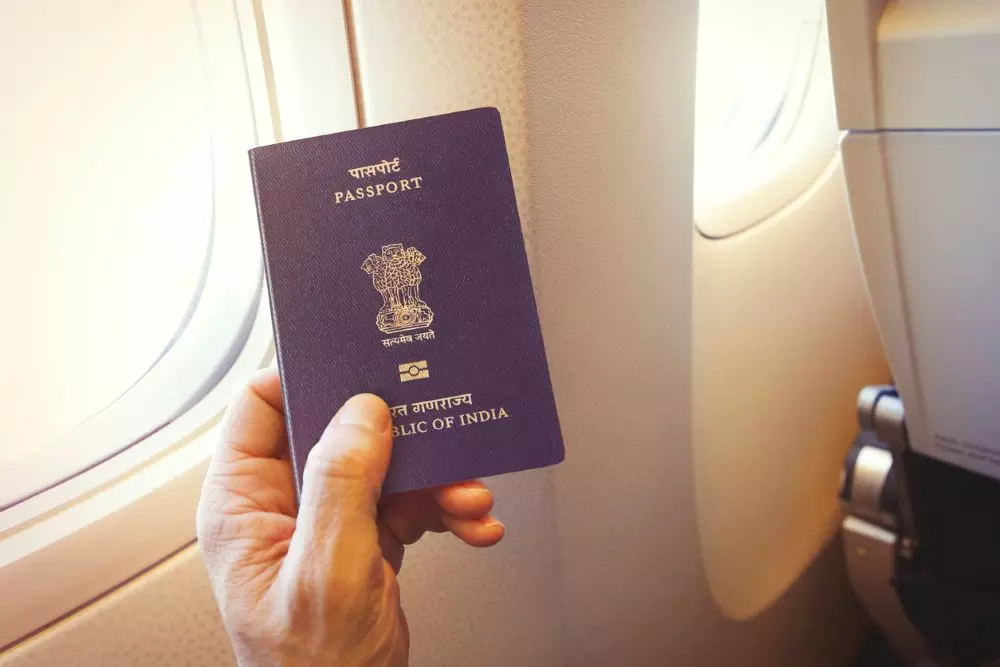
The experience of travelling with an Indian passport continues to vary depending on destination, geopolitics and international perception, claim many. Photo: iStock
It was the economic liberalisation of 1991 which democratised foreign travel for Indians to a large extent. As India's middle class expanded, foreign holidays, business travel and overseas education became increasingly common. The passport gradually came to represent not only migration but also entrepreneurship, tourism and India's growing integration with the global economy.
Today, India is among the world's largest outbound travel markets.
According to reports, “outbound travellers from India rose by 7.82 per cent to 29.56 million in the first three quarters of 2025 as compared to 27.42 million in the same period of 2024”. Reports also show that “Indian travellers spent $35 billion on overseas travel in 2024, making it the 10th largest outbound tourism source in the world”. The 2024 expenditure is reportedly a 41 per cent increase from what Indians had spent abroad in 2019 ($22.9 billion), just before the Covid pandemic of 2020-22 brought in a temporary freeze on travel.
Little wonder then that those in the tourism industry feel Indian tourists are being actively courted by destinations eager to tap into their rising spending power. Remember that scene from the 2012 Sridevi starrer English Vinglish where Amitabh Bachchan, in a cameo, coolly tells officers at the US immigration that he was in the country to help the American economy… “do some shopping, spend some dollars”.
Meanwhile, Indian professionals continue to occupy leadership positions across technology, finance, medicine and academia.
And yet, earlier this week, the Indian passport slipped from the 75th position it had held in the Henley Passport Index in February to the 80th spot. The index rates the strength of passports globally based on visa-free and visa-on-arrival access. The country ranks 125 on another rating, the Global Passport Index 2026.
Those in the travel industry argue, however, that such ratings reveal only part of the picture.
"India's growing economic strength, digital leadership, diplomatic engagement and expanding middle class have made Indian travellers an increasingly important market for global tourism. Many destinations today actively welcome Indian visitors because they recognise their high spending potential, longer average stays and growing preference for premium experiences,” says Ravi Gosain, president of the Indian Association of Tour Operators (IATO).
Claiming that the perception of the Indian passport has changed significantly over the past decade, Gosain adds: “While visa policies are determined by sovereign governments, the overall image of Indian travellers has certainly become stronger and more respected internationally."
Also read: In an era of dating apps and right swipes, why books continue to be relationship starters
Yet many say the experience of travelling with an Indian passport continues to vary depending on destination, geopolitics and international perception.
Sinha has travelled to more than 15 countries. For her, visa-free access certainly improves convenience, but it doesn't necessarily transform the overall travel experience.
"For countries that listed India as visa-free, it did make a difference in the time saved during immigration after landing. Other than that, I haven't seen much difference while applying for visas or during immigration in countries where visas are still required."
Contrary to common assumptions, she says she has never personally experienced discrimination because of her Indian passport.
"I've never faced any bias from immigration officials, airline staff or even locals. My travel experiences have largely been respectful and professional."
Her observations point to an important distinction between institutional procedures and individual interactions. Immigration systems may continue to follow rigorous security protocols, but interpersonal experiences abroad are often influenced by changing perceptions of India itself.
If there is one shift Sinha has noticed, it is the growing visibility of India on the world stage. “Surprisingly, many people know about our Prime Minister as well."
For Sinha, however, the transformation is driven primarily by economics.
"The spending capacity of a section of Indians has gone up considerably. We're no longer talking only about old wealthy families. There's a new affluent class willing to travel extensively and countries recognise that. We form one of the largest contingents of tourists in several destinations and they're cashing in on that."
Her observation aligns with what the tourism industry is witnessing globally.
Gosain believes India's expanding international influence is already translating into improved travel opportunities.
"India's rising global stature has undoubtedly improved international relationships and created greater opportunities for travel cooperation. We are seeing more countries introducing simplified visa processes, electronic visas and multiple-entry facilities for Indian citizens. However, easier travel depends on immigration policies, security considerations and bilateral agreements. India's influence is helping open doors, but there is still considerable scope for expanding visa facilitation with more destinations," he says.
But for thirty-eight-year-old entrepreneur Manu Mahalwar, the true value of a passport extends well beyond visa-free entry.
"I've travelled to Vietnam, Uzbekistan and Russia. Except for Russia, where I had to wait nearly three hours because of the geopolitical situation, my experiences have been smooth." Rather than attributing the delay to his nationality, Mahalwar believes it reflected the prevailing security environment.
What stayed with him instead was the warmth he encountered in Uzbekistan.
"Taxi drivers and shopkeepers were genuinely excited to know I was from India. Bollywood instantly became a conversation starter."
For him, these experiences define the strength of a passport.
"A passport reflects the image, credibility and trust associated with your country. Being treated with dignity, feeling safe and carrying a positive national reputation matter just as much as visa-free access."
He also believes India's international profile has become stronger.
"People abroad are increasingly familiar with India's achievements in technology, business and innovation. Indian restaurants, films and culture have become much more visible. That recognition contributes to a better travel experience."
Today, India is among the world's largest outbound travel markets. Photo: iStock
Not every traveller, however, has an equally rosy picture to share.
A 46-year-old Delhi-based media professional speaking on condition of anonymity shares an experience in Turkey during the period immediately following the pandemic. “It was while countries would still check your vaccination certificate at immigration. The officers kept looking at my vaccination certificate (which had a photo of our Prime Minister) and pointing to my face and joking amongst themselves. I finally told them the photo wasn’t mine, that the certificates in our country carried our PM’s photo. They eased up after that as I joined in their joke,” he recalls.
According to businessman and equestrian Daksh Oberoi, immigration procedures at Bangkok's Suvarnabhumi Airport have become noticeably stricter for Indian visitors.
"Earlier, immigration was fairly straightforward. Now officers often insist on return tickets, confirmed hotel bookings and supporting documents. Some travellers are kept waiting for hours before being allowed to enter, while others are deported."
Days after Oberoi shared his experience, Thailand ended visa-free travel for Indians earlier this month.
Oberoi also claims Indian travellers have encountered extensive questioning at Johannesburg airport in South Africa.
Whether these experiences stem from evolving immigration policies, security concerns or bilateral dynamics, they illustrate a larger point: passport strength is experienced not only through rankings but also through on-ground experiences.
Also read: What attempt to cover Mohenjo-daro Dancing Girl’s bare torso exposes about our own discomforts
Operational challenges, too, remain. As Gosain points out, Indian travellers continue to face practical barriers that often receive less attention than passport rankings.
"Lengthy visa appointment waiting periods, inconsistent documentation requirements, varying approval timelines and rising visa costs remain common concerns. Limited direct air connectivity to several destinations further adds to travel time and expense. During peak holiday seasons, obtaining appointments at some embassies can become particularly challenging,” he says.
Gosain believes greater visa digitisation, stronger bilateral cooperation and expanded processing capacity could significantly improve the travel experience.
"Visa-free rankings provide only one perspective. The real strength of a passport lies in how smoothly and confidently people can travel. Efficient visa processing, transparent documentation requirements, reliable airline connectivity, affordability and ease of immigration often matter more than simply the number of visa-free destinations. A passport should ultimately enable seamless mobility for business, leisure, education and investment,” he explains.
The Indian government has consistently argued that the stature of the Indian passport has improved under Prime Minister Narendra Modi's leadership. India's diplomatic footprint has certainly expanded through strategic partnerships, evacuation missions, digital passport services and stronger engagement with countries across the world.
Many frequent travellers acknowledge this changing perception.
"People generally view India with greater respect today. That change in perception has enhanced the overall travel experience,” agrees Mahalwar.
Sinha, too, admits that India's visibility has increased but argues that passport strength cannot be measured by visibility alone. "Perception matters. Japan has one of the strongest passports in the world, but many people would assume it's the United States. It goes beyond visa-free access. Which countries are actually allowing us to enter visa-free? How strong is our currency globally? Those things also shape perception."
Her point highlights an often-overlooked reality: a passport's value is influenced not only by diplomatic agreements but also by the global reputation of a country's economy, institutions and purchasing power.
The MEA's clarification reminds us that, legally, a passport is simply a travel document. But socially, politically and emotionally, it has always meant much more. It equally reflects a person’s identity and a nation's credibility abroad. It’s a chronicler of India's own journey — from a post-colonial economy with limited international mobility to a nation whose citizens are among the world's most enthusiastic travellers.
The Indian passport may not legally establish citizenship, but every time it is presented at an international border, it carries something equally significant: the story of India's evolving relationship with the world and how its citizens will be perceived beyond its borders.
That story is still being written — not just through new visa agreements or higher passport rankings, but through every traveller who leaves Indian shores and returns with a deeper understanding of how their country is viewed beyond its borders.